What is a Trademark, and Why Does It Matter?
A trademark is a word, name, symbol, or slogan that identifies your goods or services and distinguishes them from others. It’s essentially your brand name or logo. The mark that customers associate with your quality and reputation. A trademark is a powerful business asset: it represents the goodwill you’ve built and helps customers recognize and trust your products or services. Proper trademark protection is essential for maintaining your brand’s integrity, preventing others from infringing on your name, and adding value to your company over time. In short, registering and protecting your trademark gives you the exclusive right to use your brand in the marketplace and legal remedies if someone tries to copy it.
We offer a full suite of trademark legal services to help you secure, manage, and defend your trademarks. From choosing a unique name that’s eligible for protection, to filing applications, to enforcing your rights, we guide you through every stage of the trademark lifecycle. Below is an overview of the key trademark services we provide for South Carolina businesses:
Federal Trademark Registration (U.S. Trademark)
If your business operates across state lines, sells products online nationally, or plans to expand beyond South Carolina, a federal trademark registration is the gold standard for protection. We help clients prepare and file trademark applications with the United States Patent and Trademark Office (USPTO). A federal trademark, once registered, grants you nationwide rights to your mark, so you can prevent others anywhere in the U.S. from using a confusingly similar name or logo. It also allows you to use the coveted “” symbol next to your name, which signals that your brand is officially registered and protected. Federal registration provides other benefits as well, such as that you gain the ability to bring infringement lawsuits in federal court and even to record your trademark with U.S. Customs to block counterfeit imports.
Our firm will assist with the entire USPTO application process, ensuring that your application meets all legal requirements for a smooth approval. This includes helping you describe your goods/services in the proper trademark classes and responding to any USPTO office actions (questions or issues raised by the trademark examiner). Keep in mind that federal trademark registration is more complex and takes longer than a state registration. Federal registration typically takes 8-12 months or more for the USPTO to review and register a trademark (the timeline can vary). It’s also more expensive: the government filing fee is about $350 per class of goods/services for a federal application. Despite the higher cost and longer process, the broad protection of a federal trademark is worth it for many businesses. We’ll help you determine if a federal filing is right for your brand, and if so, we’ll guide you from application to registration.
South Carolina State Trademark Registration
For businesses that operate only within South Carolina or those looking for a quicker, budget-friendly way to protect a brand name, a South Carolina state trademark registration can be an excellent option. State trademark registration is done through the South Carolina Secretary of State’s office and grants protection only within South Carolina’s borders. While it doesn’t provide nationwide rights, it officially records your trademark in the state and can help prevent other businesses in South Carolina from registering a similar name or mark.
One advantage of state registration is speed and cost. South Carolina’s trademark process is typically much faster and simpler than the federal process. In many cases, a state trademark application can be processed in a matter of weeks, whereas a federal application might take a year or more. The filing fee for a South Carolina trademark is also very low: only $15 for an application (with $5 for renewals), compared to several hundred dollars for a federal application. This lower barrier makes state trademarks especially attractive for new businesses and local ventures.
However, there are limitations. A South Carolina trademark only protects you within SC. If you later expand into other states or online markets, you would need to consider federal registration to secure broader rights. Also, a federal trademark with an earlier use date could potentially limit your use of a mark, but if your mark was in use first in South Carolina, a later federal registrant cannot stop you from using it within South Carolina.

Beaufort County Courthouse
Beaufort County, SC
Importantly, South Carolina law requires that your mark is already in use in commerce before registering it at the state level. This means you should be actually selling a product or service under the name or logo in South Carolina. We’ll verify that your trademark is in use and meets all state requirements. Our firm will prepare the South Carolina trademark application, ensuring all necessary information (like a description of the goods/services and a sample of your mark’s use) is correctly provided. The Secretary of State’s office cannot give you legal advice on how to fill out the application. If you make a mistake, your application could be denied and state filing fees are non-refundable. By having us handle the process, you can avoid common pitfalls and be confident that your paperwork is done right.
We also counsel clients on the pros and cons of state vs. federal trademark protection. If you’re unsure which route to take, we’ll discuss factors like your budget, timeline, and business goals. Our priority is to secure the appropriate level of protection for your brand without unnecessary cost or complexity. In some cases, we might even recommend doing both: a state registration for immediate local protection and a federal registration for long-term expansion. We tailor our approach to what makes the most sense for your business.
Trademark Search & Clearance
Before filing any trademark application, whether in South Carolina or with the USPTO, it’s crucial to conduct a trademark search and clearance. A thorough search helps determine if your desired name or logo (or something confusingly similar) is already in use or registered by someone else. Our firm will perform comprehensive searches of existing trademarks, business names, and online uses to evaluate whether your proposed mark is available and legally safe to use. We look at South Carolina’s trademark records and the federal USPTO database, among other resources.
Performing a diligent search can save you from big headaches down the road. If you were to file a trademark that conflicts with an existing brand, your application could be rejected or, worse, you could inadvertently infringe on someone’s rights. We analyze the search results and provide clear guidance: if there are potential conflicts, we’ll let you know and can help you brainstorm modifications to your mark, or if the coast is clear, we proceed confidently. We highly recommend every client undergo a clearance search, it’s a small upfront effort that greatly increases the chances of a smooth registration. As part of our service, we identify any potential conflicts before filing and advise you on risk, so you can make an informed decision.

Spartanburg County Courthouse
Spartanburg County, SC
Trademark Monitoring & Enforcement
Securing a trademark is only the first step in brand protection. Equally important is monitoring and enforcement, keeping an eye out for unauthorized use of your mark and taking action if it occurs. We offer ongoing trademark monitoring services where we periodically check marketplaces, business filings, and online sources to catch any potential infringement. If another business starts using a name or logo that is too close to yours, especially in South Carolina, we will alert you and discuss the appropriate response.
When it comes to enforcement, our firm is ready to assert your rights and stop infringers. Enforcement can range from a simple cease-and-desist letter (informing the infringer of your rights and demanding they stop) to more formal legal proceedings. We always aim for the most efficient solution. Often, a firmly worded letter from a lawyer is enough to resolve the issue. In other cases, we may file an opposition with the USPTO if someone tries to register a similar trademark, or take the matter to court if necessary. Our enforcement services include identifying unauthorized uses of your trademark and taking appropriate legal action to protect your brand’s integrity. This could mean negotiating with the infringer for voluntary compliance, initiating a trademark infringement lawsuit in state or federal court, or working with online platforms to take down infringing content.
In South Carolina, having a state-registered trademark can also help in enforcement; it puts others on notice that you claim rights to the mark. And federally, a registration is a powerful tool in court if litigation is needed. We have experience handling trademark disputes and will fight to ensure that your exclusive rights are respected. Think of us as your brand’s watchdog, we help police your trademark so you can maintain its strength and value.
Trademark Renewals & Maintenance
Obtaining a trademark is not a one-and-done deal; trademarks require ongoing maintenance and renewal to keep them active. Both state and federal trademarks need to be renewed periodically to retain their registered status. We assist clients with tracking and fulfilling these requirements so that your trademark protection never lapses.
- South Carolina Renewals: A South Carolina state trademark registration is valid for five (5) years from the date of registration. To keep it in force, you must file a renewal application (and pay a small $5 renewal fee) before the five-year period expires. We will calendar your renewal deadline and prepare the necessary paperwork to renew your state trademark in a timely manner. This ensures you continue to have uninterrupted protection in South Carolina.
- Federal Maintenance and Renewals: Federal trademarks have a different schedule. Between the 5th and 6th year after your federal registration, you must file a Section 8 Declaration of Use (essentially proof that you’re still using the mark) with the USPTO, and optionally a Section 15 Declaration for incontestability. Then, at the 10-year mark from registration, you file a combined renewal (Sections 8 and 9) to extend the registration, and every 10 years thereafter. Missing these filings can result in cancellation of your federal trademark. We handle the entire maintenance process: reminding you of upcoming deadlines, preparing and submitting the required documents, and responding to any USPTO inquiries. With our help, you’ll never have to worry about losing your trademark rights due to a missed deadline.

Saluda County Courthouse
Saluda County, SC
In addition to formal renewals, maintaining a trademark also means proper usage. We provide guidance on how to use your trademark correctly in commerce (for example, consistent branding, using the ™ or ® symbols appropriately) to preserve your rights. If your business changes, perhaps you modify your logo or expand your product line, we can advise how that affects your trademark registrations and whether any updates or additional filings are needed. Our goal is to make sure your trademarks remain robust and enforceable for as long as you need them.
Trademark Assignments & Transfers
Your trademark is an asset, and like any business asset, there may come a time you need to transfer it. This could happen if you sell your company, rebrand and want to assign the mark to a new entity, or bring on a partner/investor who needs ownership rights. Transferring trademark ownership is done through a legal document called an Assignment. We assist clients with drafting trademark assignment agreements and recording them with the appropriate office to ensure the transfer is legally effective.
- For South Carolina state trademarks, the transfer process involves filing an assignment document with the South Carolina Secretary of State. It’s important to properly record the assignment; otherwise, the change in ownership might not be recognized. We handle the submission and confirm that the state’s trademark registry reflects the new owner of the mark once completed.
- For federal trademarks, we prepare the assignment agreement and file it electronically with the USPTO’s Assignment Recordation Branch. This updates the public record so that anyone searching the USPTO database can see the trademark’s new owner. We ensure that all details (like trademark registration numbers, names of assignor/assignee, and execution dates) are correctly included to avoid any rejection of the recording.
In addition to assignments (permanent transfers of ownership), we can also help with licensing arrangements, where you (the trademark owner) want to permit another party to use your trademark under certain conditions (common in franchises or product licensing deals). While licensing is not the same as transferring ownership, it’s related in that it involves granting rights in your mark to others. Our firm can draft licensing agreements to protect your interests and maintain quality control over how your brand is used.
Whether it’s an intra-family transfer of a business name, a corporate merger requiring trademarks to be moved, or splitting trademark rights as part of a settlement, we’ll guide you through the proper legal steps. Remember, timely recording of trademark assignments is important. The USPTO will consider the last recorded owner as the rightful owner in proceedings. We make sure your trademark assets are correctly documented whatever changes occur in your business.
Trademark Frequently Asked Questions
Q: Should I register my trademark in South Carolina or at the federal level?
A: It depends on your business’s current scope and future plans. If you only operate within South Carolina and don’t plan to do business in other states, a South Carolina state trademark registration may be sufficient and cost-effective for now. State registration will protect your brand within SC and is relatively quick and inexpensive. On the other hand, if you operate in multiple states, sell products/services online nationally, or anticipate expanding beyond South Carolina, you should consider a federal trademark. A federal registration provides nationwide protection and stronger legal enforcement tools (like access to federal courts and the ability to block imports of infringing goods). Some businesses actually choose to do both: secure a state trademark early for fast local protection, and then obtain a federal trademark as the business grows. We’re happy to discuss your specific situation to determine the best strategy.

Jasper County Courthouse
Jasper County, SC
Q: Do I really need a trademark search before filing an application?
A: Yes, a trademark search (often called a clearance search) is a critical first step. The search checks if your desired name, logo, or phrase is already in use or registered by someone else. Even if you came up with your brand name independently, there might be a similar name out there that could conflict. Filing a trademark application without a proper search is risky: if a similar mark exists, your application could be rejected, or you might even inadvertently infringe on another company’s rights. By doing a search upfront, we can identify potential conflicts before you spend time and money on the application. If we find an existing mark that’s too close, we can discuss options, like tweaking your name or choosing a different brand, before you’re invested. In short, a search helps ensure that when we file, you have a high chance of success and won’t run into legal trouble down the road. This small investment in research can save you from a big headache, so we include thorough clearance searches as part of our trademark services.
Q: What can I do if someone is using my business name or logo without permission?
A: If you suspect someone is infringing your trademark (meaning they’re using a name, logo, or slogan that is confusingly similar to yours in a way that could mislead customers) you have several options, and we can help with all of them. The moment you become aware of a potential infringement, contact us so we can evaluate the situation. Typically, the first step is for us to send a cease-and-desist letter to the other party. This letter will inform them of your trademark rights (state and/or federal) and demand that they stop using the infringing mark. In many cases, that resolves the issue; people often don’t realize they’re infringing and will rebrand once put on notice. If a letter doesn’t work, we can consider further enforcement actions. This could include filing a trademark infringement lawsuit in court to obtain an injunction (court order) to stop the use and possibly recover damages. If the infringement is online (for example, someone using your name on a website or social media), we can also use takedown procedures with web hosts and platforms. For federally registered marks, the USPTO provides processes like oppositions (if someone is trying to register a similar mark, we can formally oppose it) and cancellations (to cancel a conflicting registration). Our role is to identify unauthorized uses of your trademark and take the appropriate legal action to protect your brand. We act as your advocate to ensure that your hard-earned brand recognition isn’t diluted or damaged by copycats or competitors. Every situation is unique, so we will devise an enforcement approach that fits the circumstances, escalating if necessary. Rest assured, we take infringement seriously, your success and peace of mind are our priorities.
Q: How long does a trademark last, and do I need to renew it?
A: Trademark rights can last indefinitely if you continue to use the mark in commerce and meet renewal requirements. But there are scheduled renewals to keep a registration active. For a South Carolina state trademark, the registration is valid for 5 years at a time. You must file a renewal application every five years to maintain your state trademark. We will remind you when a renewal is coming up and handle the filing for you. The good news is the state renewal fee is very low (currently $5). For a federal trademark, the timeline is a bit different: you have to file a maintenance document at the 6-year mark (to confirm the mark is still in use) and then a renewal at the 10-year mark from registration, and every 10 years thereafter. The federal renewal process is more involved and has higher fees, but again, we manage all of this for our clients. The key point is that a trademark registration can last forever if you keep using the mark and follow the renewal rules. If you don’t renew, the registration will expire (or be canceled), and you’d lose the benefits of registration. We often say: your trademark is like your business’s home, as long as you pay the “property taxes” (renewal fees) and maintain it, you can keep it indefinitely. And even if a registration lapses, you might still have common-law rights through use, but it’s best to keep registrations active. Our firm will keep your trademark protection on track so that your brand stays secure for the long haul.
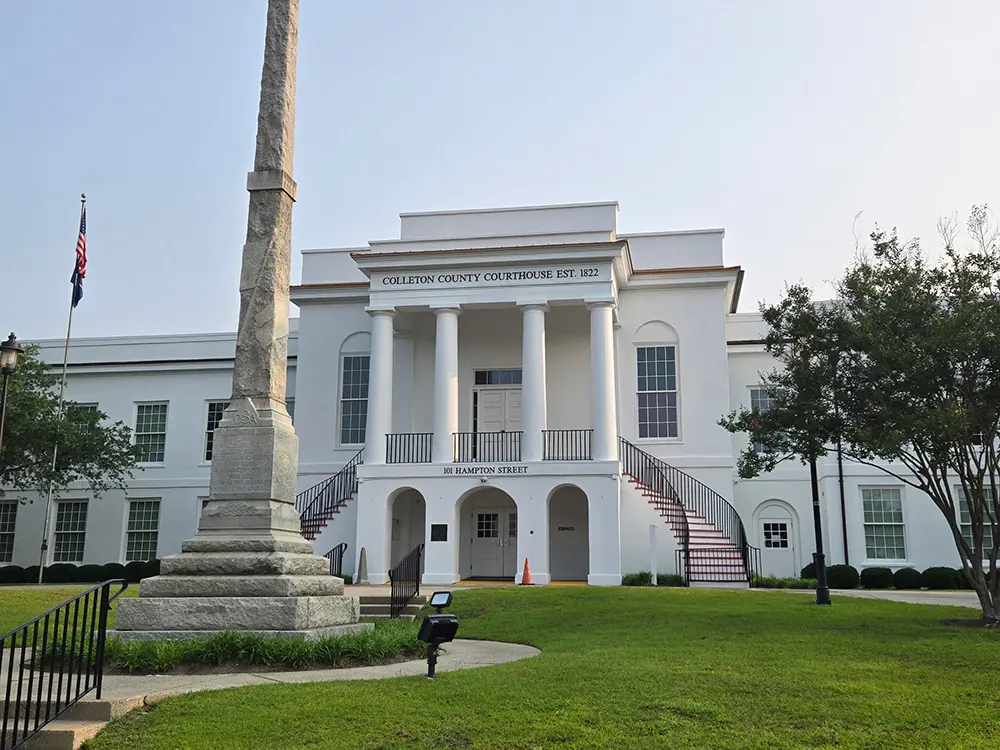
Colleton County Courthouse
Colleton County, SC
Q: Why should I hire an attorney for trademark registration?
A: Hiring an attorney for trademark work can save you time, money, and stress. Trademark law can be surprisingly complex. There are specific requirements for how applications must be written, what can and cannot be registered, and strict deadlines for responses. Mistakes in the process can lead to delays or even a refusal of your application, which means wasted time and fees. When you work with us, you get experienced guidance at each step. We conduct a proper search, advise you on any issues (for example, if your mark is too descriptive or conflicts with an existing mark), and ensure your application is complete and correct for submission. If the government examiner raises any questions or objections (called an “Office Action”), we handle crafting a legal response to overcome those issues. Additionally, the South Carolina Secretary of State’s staff cannot provide legal advice or help in filling out your trademark application. If something is unclear, you’re on your own unless you have a lawyer. By having us involved, you essentially get a trusted partner who has done this many times and can anticipate problems before they arise. We also help strategize on state vs. federal filing and make sure you’re choosing the right path for protection. Beyond the registration itself, a trademark attorney can set up a monitoring routine, help you enforce your rights, and answer questions that come up as you grow your brand. In summary, while it’s possible to attempt a trademark filing yourself, most businesses find that an attorney’s assistance pays off in the long run by securing the trademark smoothly and providing peace of mind. We’re here to make protecting your brand as easy and effective as possible for you.